Hi, I'm Himal: a financial economist in training, food obsessive, and opinionated home cook.
I grew up in Kathmandu, where momo is not just food. It is habit, argument, comfort, and civic infrastructure. Everyone has a favorite place. Everyone thinks everyone else is wrong.
That argument started this project.
The Dumpling Project is an enthusiast encyclopedia for dumplings around the world, plus one momo lover's personal notebook of recipes, arguments, and kitchen experiments.
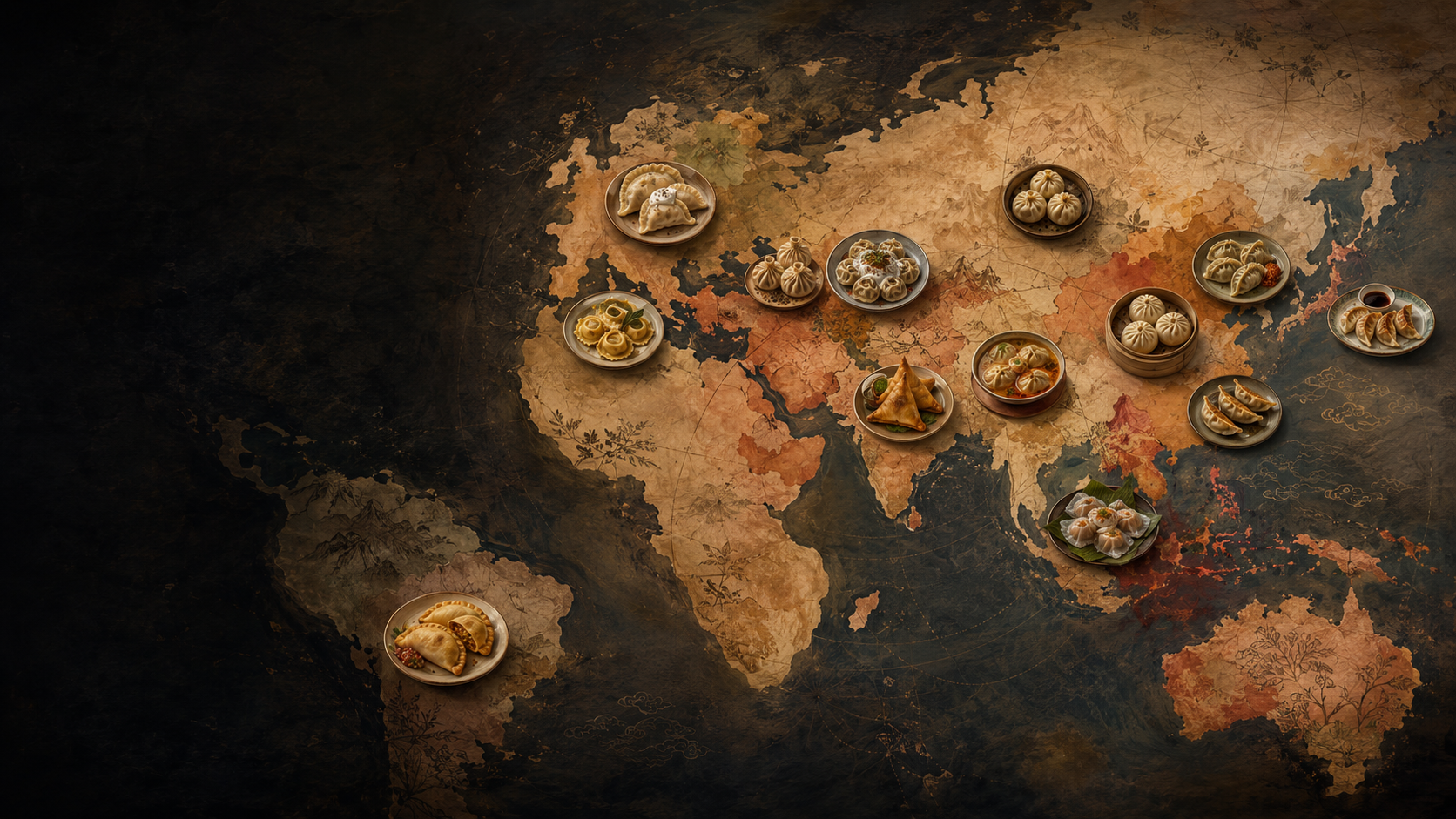
Here is a quick peek at the dumplings covered so far. The full Dumpling-pedia is where the proper trouble lives: an interactive map, source-backed entries, filters, origin caveats, and enough filled dough to make neat categories start sweating.
The Dumpling-pedia stays careful and sourced. The notebook is the personal side room: Kathmandu opinions, achar logic, recipe tests, and the ongoing work of making momo taste right far from home.
Some origins are documented. Some are disputed. Some are stories people kept telling because they tasted true.
Ancient to medieval
Wheat, wrappers, and regional invention
Across Eurasia, wheat dough, noodles, and filled parcels appear in different contexts. The evidence supports multiple regional traditions and exchange, not one proven dumpling birthplace.
Manti, mantu, mantou, and related names appear across Turkic, Persianate, Central Asian, Chinese, Afghan, and Anatolian contexts. Resembling names do not by themselves prove a single recipe or route.
Printed cookbooks and regional records make some filled-pasta and crescent-dumpling traditions easier to date. A dated recipe proves use, not invention.
Restaurants, border changes, migration, industrial wrappers, and frozen food reshape older dumpling forms. Modern popularity should not be mistaken for an ancient, unchanged recipe.
Dumplings now move through family kitchens, street food, restaurants, migration, and digital media. The global category is useful, provided it does not erase local names or claim one ancestry for every parcel.
Not a finished authority. Not a search for one perfect origin story. More like a carefully organized notebook that learned how to become a Dumpling-pedia.
How it started
For years, my curiosity about food sent me chasing momo stories, old recipes, migration routes, and suspiciously similar things wrapped in dough. The notes piled up in Google Docs, waiting for a place to live.
How it became buildable
AI helped me turn that pile into a project. It filled in gaps, extended the research, cleaned up the structure, and added some obvious entries I had missed along the way.
How to read it
So this is not a finished authority on dumplings. It is a Dumpling-pedia in progress, built from curiosity, hunger, memory, and a little machine-assisted detective work.
Food moves because people move. Sometimes the evidence is clean. Often it is not. The interesting part is what happens in the fog.
Methodology
Origins are slippery. Good.
The project is built for foods whose histories refuse to sit still. A dumpling can move through trade, migration, restaurant menus, family memory, and plain old coincidence before anyone writes it down.
These labels explain how to read the Dumpling-pedia: what kind of evidence supports an entry, why it belongs here, where the sources are doing real work, and where my personal momo notebook steps away from the sourced entries.
Confidence
Well supported, plausible, thin evidence, contested, mostly legend, and unknown are reading tools, not verdicts. The top label requires multiple credible sources.
How it fits
Clearly a dumpling, dumpling cousin, and on the border explain why an entry belongs without flattening every filled dough into the same thing.
Sources
Citations now sit beside the claims they support. A cookbook can guide technique without being asked to prove a medieval origin.
Notebook
Personal momo notes and recipes live separately from the Dumpling-pedia so appetite, memory, and evidence do not get confused.